
Stellantis Debuts the eBoost Air Powertrain Concept From Its SRT Performance Division
August 14 2026,
Ask any performance driver what ruins a good launch and they’ll say the same thing: turbo lag. That split-second delay while a big turbo spools up is exactly what SRT’s new eBoost Air concept is built to erase.
For Quebec drivers who follow turbocharged engineering, this is worth understanding now, well before it ever reaches a showroom.
What Is eBoost Air
eBoost Air is a powertrain technology concept from Stellantis’ SRT performance division, the group behind Dodge, Jeep, and Ram performance engineering. It is not a production vehicle, has no trim lineup, and carries no pricing.
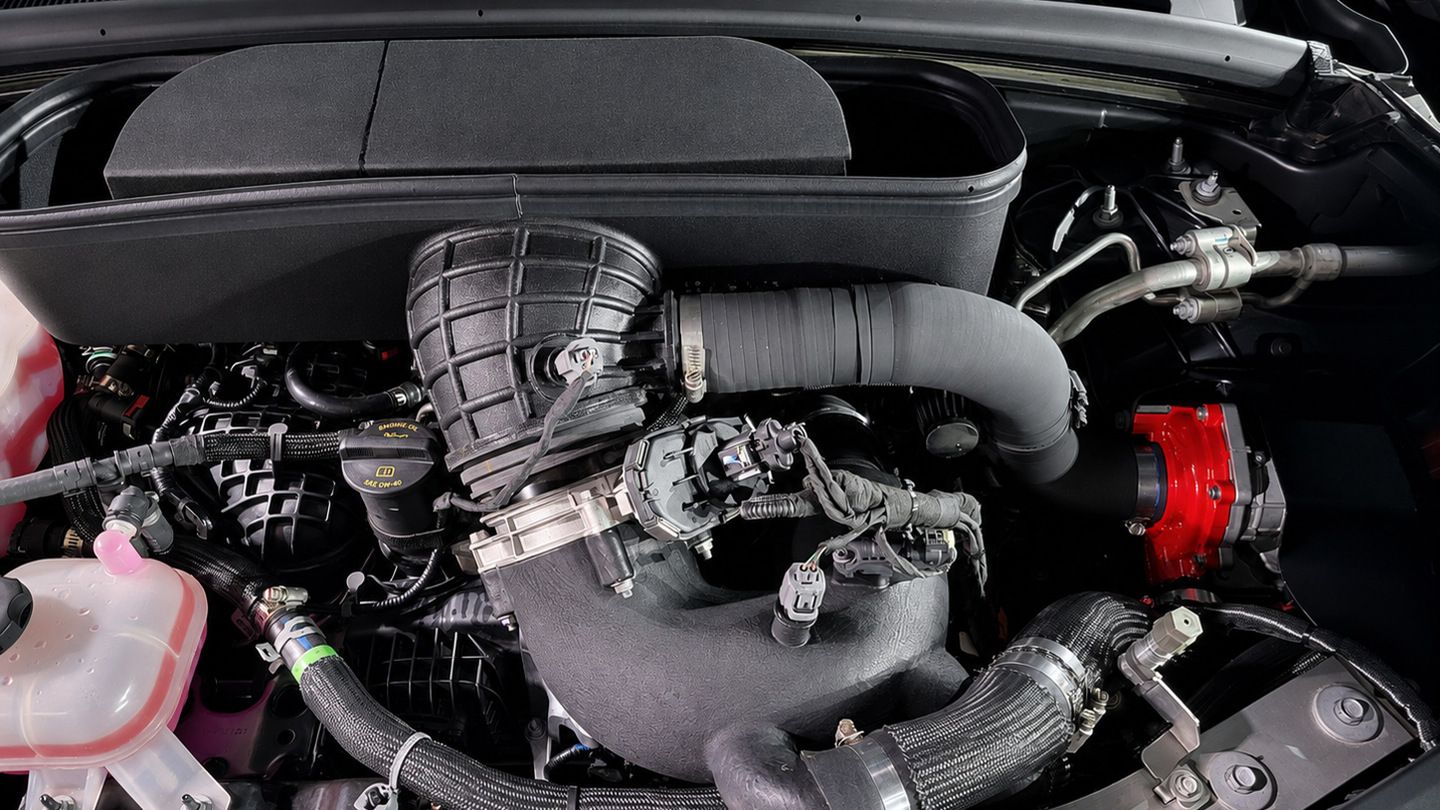
Think of it as a proof-of-concept aimed at a very specific problem: how to get the power of a large turbocharger without the delay before that power arrives. SRT built a prototype using the 3.0L Hurricane inline-six to demonstrate the idea.
SRT describes itself as the company’s innovation incubator, and eBoost Air is presented as an example of that role in action, moving from an idea on paper to a working prototype in weeks.
How eBoost Air Works
Traditional turbochargers rely on exhaust gas to spin a turbine, which forces more air into the engine for stronger combustion. It is an efficient system because it recycles energy that would otherwise go to waste.
The catch is size. Larger turbochargers can move more air and make more power, but they need strong exhaust pressure to spool up. At low rpm, that pressure isn’t there yet, so the engine hesitates. That gap is turbo lag.
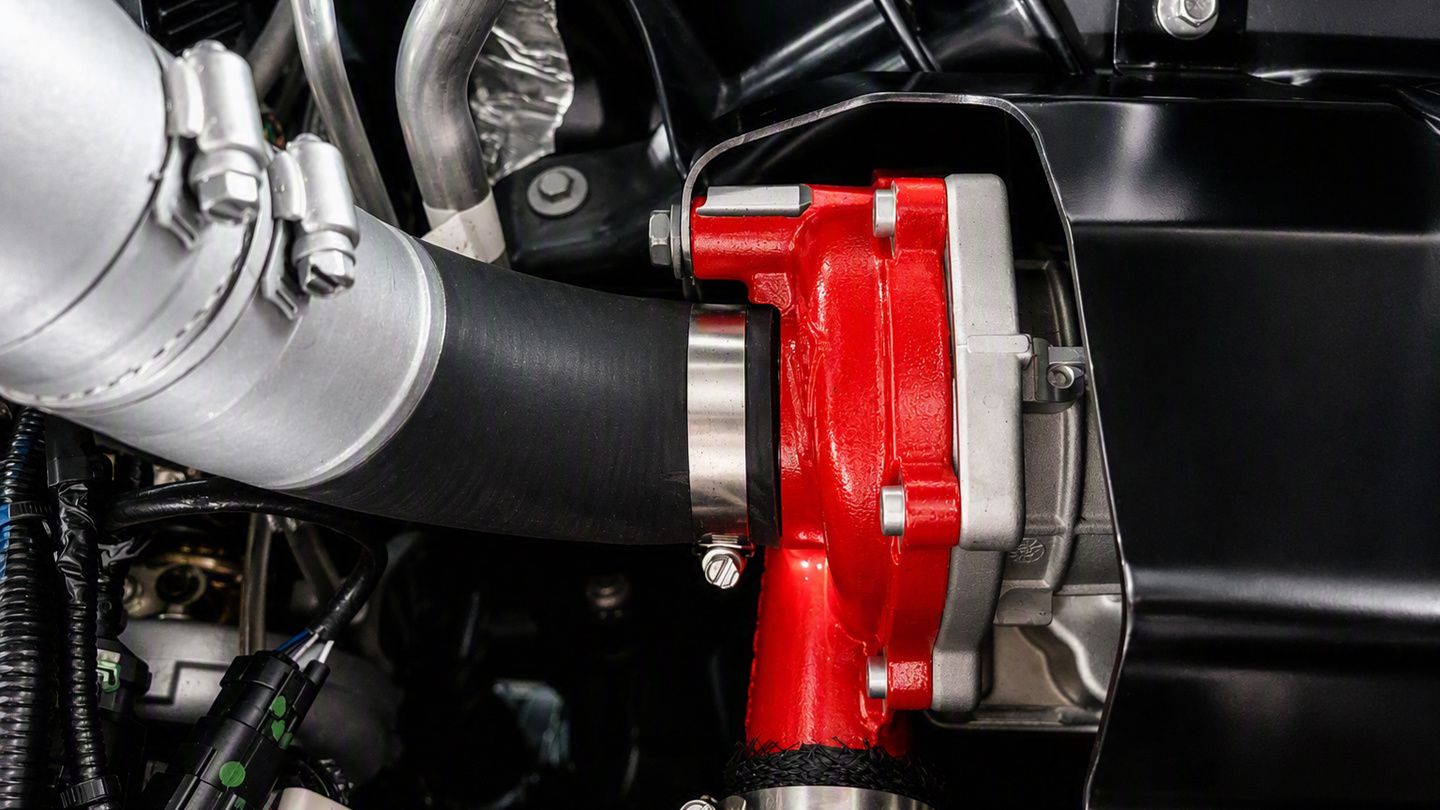
eBoost Air closes that gap with an electric compressor, or e-compressor, placed upstream in the airflow path. The system uses electronically controlled bypass logic to manage the handoff.
- When the driver asks for immediate torque and the turbos aren’t yet spinning fast enough, airflow routes through the e-compressor, which builds boost pressure electrically.
- Once exhaust energy is strong enough to drive the turbochargers on its own, airflow returns to the normal path and the turbos take over.
That handoff, from electric assistance at low rpm to sustained exhaust-driven boost as engine speed climbs, is the core of how eBoost Air keeps power flowing without interruption.
Why It Matters in Real Driving
The practical result is a broader, more consistent power band. SRT says the feel more closely resembles a supercharged V8: immediate response off idle, then power that builds smoothly rather than surging in once the turbos catch up.
For a performance-minded driver, that translates into confidence at low speed and stronger acceleration when you need it, without the pause that has defined big-turbo engines for decades.
The engineering goal is a more linear performance character overall. SRT also frames the concept as preserving the efficiency benefits of turbocharging while removing its biggest drawback, so larger turbochargers stay in play for future tuning without asking drivers to live with the lag that normally comes with them.
Who Should Pay Attention
eBoost Air speaks most directly to readers who already care about how forced induction is engineered, not just the horsepower figure at the end. If throttle response and drivability matter as much to you as peak output, this is the kind of development worth tracking.
It also matters to anyone watching where Dodge’s turbocharged lineup could go next. SRT has already used the twin-turbo Hurricane six in production models, so the division’s appetite for testing e-compressor tech on that same architecture signals where forced-induction development is headed, even with no production application confirmed yet.
Following SRT’s Next Move
eBoost Air remains a proof-of-concept demonstrated on the Hurricane inline-six, with no confirmed production timing or vehicle application. It represents SRT’s approach to solving turbo lag through electric pre-spooling rather than mechanical size alone.
Explore how Dodge’s turbocharged engineering continues to evolve by visiting Grenier Chrysler Montréal-Est in Montreal-Est. Stop in to talk with our team about the Hurricane-powered Dodge lineup available today.