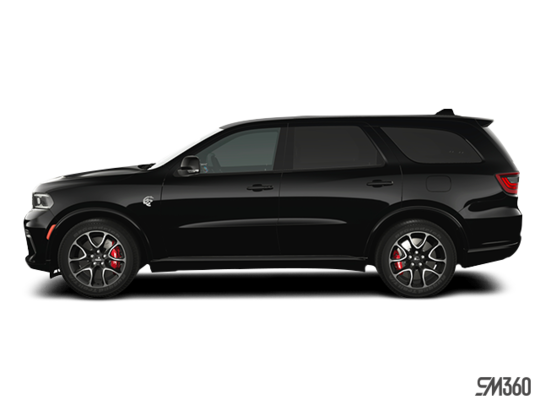

Hurricane 4 Turbo vs Three-Row Seating: The 2026 Grand Cherokee and Durango Compared for Families
March 27 2026,
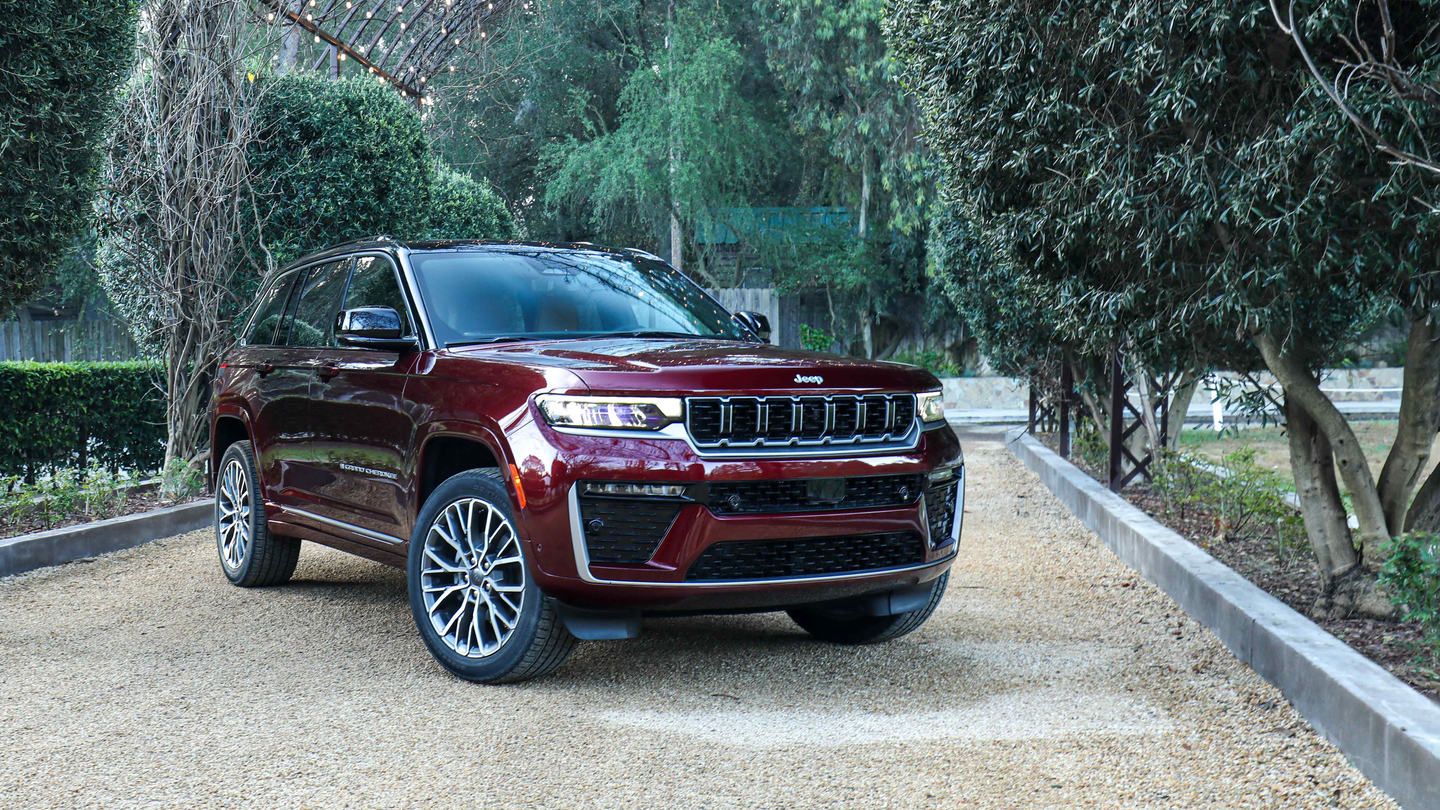
Montréal-Est families navigating the A-40 at rush hour, loading up for a weekend at the chalet, and managing Quebec's winter roads in between face a real decision between two capable SUVs that approach family life very differently. The 2026 Jeep Grand Cherokee arrives with an all-new turbocharged engine as its headline story — one that delivers more power than the Durango's base V-6 while running on regular unleaded and covering up to 851 km on a single tank. The Dodge Durango counters with three-row seating, 2,409 litres of maximum cargo volume, and a V-6 towing rating of 2,812 kg (6,200 lbs).
Both offer standard all-wheel drive and confident performance on Quebec roads. The core decision comes down to whether your family needs a third row.
Quick Comparison at a Glance
|
Feature |
2026 Jeep Grand Cherokee |
2026 Dodge Durango |
|---|---|---|
|
Primary Engine |
2.0L Hurricane 4 Turbo |
3.6L Pentastar V-6 |
|
Horsepower |
324 hp |
295 hp |
|
Torque |
332 lb-ft |
260 lb-ft |
|
Estimated Range |
Up to 851 km (single tank) |
— |
|
Towing Capacity |
2,812 kg (6,200 lbs) |
2,812 kg (6,200 lbs) |
|
Maximum Cargo Volume |
— |
2,409 L |
|
Seating |
5 |
Up to 7 |
|
PHEV Option |
Grand Cherokee 4xe available |
Not available |
The Grand Cherokee's New Engine: Hurricane 4 Turbo
The headline change for the 2026 Grand Cherokee is the all-new 2.0-litre Hurricane 4 Turbo engine, standard from the Laredo Altitude trim upward. This turbocharged inline four-cylinder produces 324 hp and 332 lb-ft of torque — more horsepower than the Durango's base V-6, and more torque than many larger displacement engines in its class. It uses Turbulent Jet Ignition technology, a combined direct- and port-fuel-injection system, and a 12:1 compression ratio to extract 162 hp per litre, all while running on regular 87-octane fuel.
The practical result for Quebec families is an estimated best-in-class driving range of up to 851 km on a single tank, and a class-leading towing capacity of up to 2,812 kg (6,200 lbs). For the run from Montréal to Quebec City and back, fewer fuel stops and confident passing power on the A-20 make a real difference.
The base Laredo trim retains the proven 3.6-litre Pentastar V-6, producing 293 hp and 260 lb-ft of torque, for buyers who want a straightforward entry into the lineup.
For families who want electrified driving, the Grand Cherokee 4xe pairs a plug-in hybrid system with the 2.0-litre turbo base engine, delivering 375 hp and 470 lb-ft of torque combined through two electric motors and a 17.3 kWh battery. It tows up to 2,722 kg (6,000 lbs) and supports Level 2 charging at up to 7.2 kW.
The Durango's Powertrain Range

The Durango takes a more traditional approach with a broader engine range. The base GT AWD runs the 3.6-litre Pentastar V-6, producing 295 hp and 260 lb-ft of torque. The GT HEMI V-8 AWD steps up to 360 hp with the 5.7-litre HEMI V-8. At the performance end, the SRT Hellcat delivers 710 hp from a supercharged 6.2-litre V-8 — a different use case entirely, aimed at performance buyers.
All Durango trims carry full-time AWD as standard. V-6 towing capacity matches the Grand Cherokee Hurricane at 2,812 kg (6,200 lbs).
Space and Practicality: Where the Durango Pulls Ahead
The Durango's most straightforward advantage is its third row. Three-row seating for up to seven passengers makes it the more practical choice for larger families — three kids in school, regular carpool duty, or extended family road trips on the autoroute. The 2,409 litres of maximum cargo volume handles sports equipment, camping gear, or luggage with the rear seats folded. Second-row captain's chairs are available to improve third-row access.
The Grand Cherokee focuses on two rows with seating for five, prioritizing a more refined ride and more accessible day-to-day cargo use. Multi-link independent suspension front and rear delivers composed handling whether you're on the A-40 or on a gravel access road north of the city.
If a third row is a genuine weekly requirement, the Durango is the clearer answer. Families of four who rarely use a third seat will find the Grand Cherokee's layout more practical on a daily basis.
Technology and Safety
Both vehicles use Uconnect 5 with a 10.1-inch touchscreen, wireless Apple CarPlay, and wireless Android Auto. The Durango includes standard navigation, Blind-spot Monitoring with Rear Cross Path detection, Forward Collision Warning with Active Braking, Adaptive Cruise Control with Stop, seven airbags with full-length three-row side-curtain coverage, and ParkSense rear park assist.
The 2026 Grand Cherokee's update extends beyond the engine — the lineup also gains a larger infotainment display on higher trims and updated interior appointments. The 4xe variant adds regenerative braking with paddle-shifter control and adaptive management across electric-only, hybrid, and engine-only modes.
All-Wheel Drive and Winter Confidence
Both vehicles handle Quebec winters without requiring driver intervention. The Grand Cherokee's available Quadra-Trac system provides full-time 4x4 operation automatically. The 4xe adds a two-speed transfer case with a 4x4 Low range for more demanding conditions. The Durango's standard full-time AWD manages winter roads and light off-road use across all trims, with an available two-speed transfer case adding low-range gearing on select models.
For Montréal-Est winters — ice on urban streets, slush on the highway, and the occasional gravel road on the way to the Eastern Townships — both vehicles provide reliable traction.
Making the Right Choice
The 2026 Grand Cherokee with the Hurricane 4 Turbo is the stronger choice for families of five who want a more powerful and more fuel-efficient engine than a comparable V-6, with a two-row interior that keeps cargo accessible. The 4xe is the right move for buyers who want to cut fuel costs on daily driving while keeping full range for longer trips.
The Durango is the more practical choice the moment a third row is genuinely needed. Its seating for seven, 2,409 litres of cargo volume, and V-8 engine options serve larger families and buyers who want traditional powertrains with more output headroom.
Come into Grenier Chrysler Montréal-Est to compare both side by side — walk through the cargo configurations, sit in the Durango's third row, and book back-to-back test drives on routes you actually drive every day.